For Adults 45+ SERIOUS ABOUT THEIR HEALTH

Combat Insulin Resistance for Dementia Prevention
One in three Australians has insulin resistance. Discover how annatto tocotrienol and geranylgeraniol match Metformin's effectiveness plus protect your brain, heart & liver.
FATTY LIVER DISEASEANTI-AGEINGCANCERCARDIOVASCULAR HEALTHLONGEVITYMETABOLIC HEALTHTYPE 2 DIABETESBRAIN HEALTHINFLAMMATIONBONE HEALTHMUSCLE HEALTHCELLULAR HEALTH
Alexander J.
1/11/202619 min read

PART 1
THE ESSENTIAL FACTS YOU NEED TO KNOW
Insulin Resistance - Australia's Hidden Health Crisis And What You Can Do About It
In 60 seconds, here's what you need to know
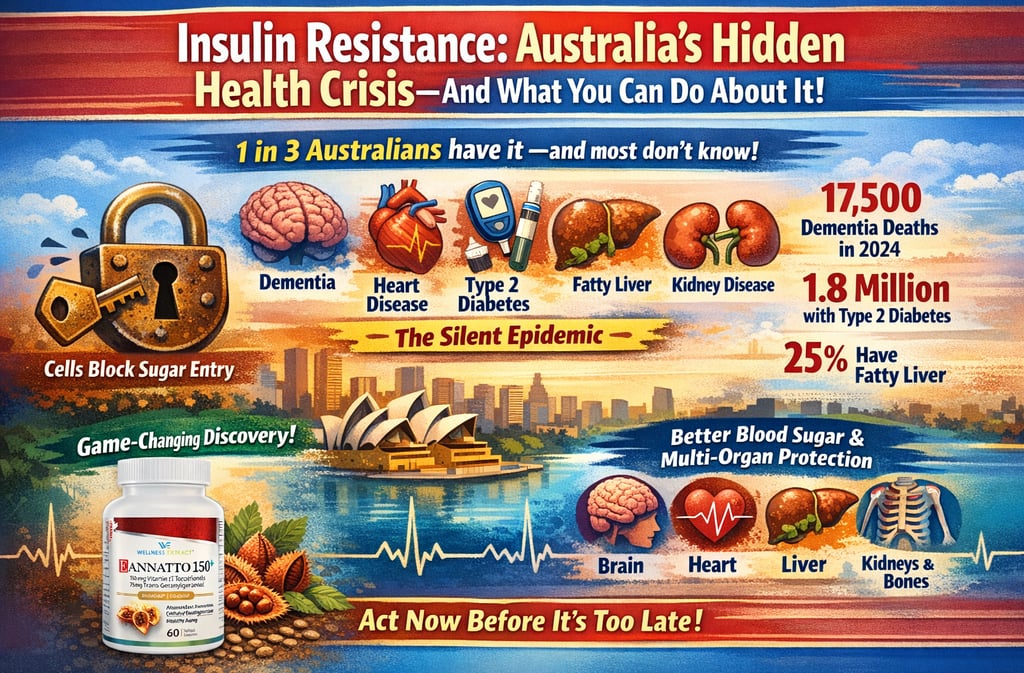
One in three Australians has a metabolic condition called insulin resistance—and most don't know it. This silent condition is the common thread linking Australia's biggest killers: dementia (now our #1 cause of death), heart disease, type 2 diabetes, cancer, fatty liver disease, and kidney disease.
What Is Insulin Resistance, In Plain English?
Think of insulin as a key that unlocks your cells to let sugar (glucose) in for energy. When you have insulin resistance, the locks become rusty and harder to open. Your body compensates by making more and more keys (insulin), but eventually this system breaks down. Worse still, having too many keys floating around damages blood vessels, nerves, and organs throughout your body—often for decades before you feel any symptoms.
The Australian Reality Check
Dementia overtook heart disease in 2024 as Australia's leading killer, claiming over 17,500 lives
Type 2 diabetes affects 1.8 million Australians (diagnosed and undiagnosed)
Over 430,000 Australians currently live with dementia—projected to exceed 1 million by 2065
Nearly half (43%) of dementia cases are linked to preventable factors, with insulin resistance at the centre
25% of Australians have fatty liver disease, driven by insulin resistance
3 million Australians take statins, which can worsen insulin resistance and increase diabetes risk by 10-20%
The Game-Changing Discovery
Here's the remarkable news: researchers have found that two natural compounds from the annatto plant—delta-tocotrienol and geranylgeraniol—are as effective as Australia's most prescribed diabetes drug (metformin) for improving blood sugar control, but with additional benefits metformin cannot provide.
What the Science Shows (In Numbers Anyone Can Understand)
Human Clinical Trial Results
Blood sugar control improved by 6.8%
Insulin levels dropped by 7.6%
Insulin resistance decreased by 13.1%
Long-term diabetes marker (HbA1c) dropped from 8.3% to 7.8%—approaching the safe zone that prevents complications
Inflammation markers fell by 10-16%
Oxidative stress (cell damage) reduced by 9%
Zero side effects reported
Head-to-Head Comparison with Metformin
When researchers directly compared annatto tocotrienol with metformin in diabetic animals:
Equally effective at lowering blood sugar and improving glucose tolerance
Better than metformin at improving insulin sensitivity
Prevented bone loss (metformin provided zero bone benefits)
Worked through multiple protective mechanisms metformin cannot replicate
Beyond Blood Sugar - The Multi-Protection Effect
Unlike pharmaceutical drugs that target one problem, these natural compounds protect multiple organs simultaneously:
✓ Brain: Reduces insulin resistance linked to Alzheimer's and cognitive decline
✓ Heart: Lowers inflammation, improves blood vessel function, optimises cholesterol
✓ Liver: Reverses fatty liver disease and reduces liver inflammation
✓ Kidneys: Slows diabetic kidney damage
✓ Bones: Strengthens bone structure and prevents fractures (crucial for diabetics)
✓ Muscles: Protects against statin-induced muscle damage and weakness
✓ Gut: Increases beneficial bacteria linked to better metabolism and cancer protection
Who Should Pay Attention?
You might have insulin resistance if you:
Carry excess weight, especially around your abdomen
Have been told you have pre-diabetes or borderline high blood sugar
Have type 2 diabetes
Take statin medications for cholesterol
Have high blood pressure
Have been diagnosed with fatty liver
Have a family history of diabetes or dementia
Experience persistent fatigue or brain fog
Are a woman with PCOS (polycystic ovary syndrome)
Are concerned about dementia risk as you age
What You Can Do - Starting Today
Evidence-Based Protection
For prevention: 150-300 mg delta-tocotrienol + 75-150 mg geranylgeraniol daily. An effective and convenient way is to take one Eannatto® 150+ daily (150mg DeltaGold™ Tocotrienol E (ARTG #373033)+ 75mg GG-Gold™) or twice daily with meals, preferably split over breakfast and dinner.
For active insulin resistance or diabetes: 250-300 mg delta-tocotrienol + 150 mg geranylgeraniol daily. Take Eannatto® 150+ twice a day (dinner and breakfast) and add 1 x GG-Essential for dinner.
For statin users: At minimum 150 mg geranylgeraniol daily to prevent drug-induced complications. 1 x GG-Essential® with a meal.
Take with food containing healthy fats for best absorption. Divide into two doses (breakfast and dinner) for sustained benefits.
Safety Record
Clinical trials show excellent safety with no adverse effects at doses up to 400 mg daily. Safe to take alongside diabetes medications (though you should inform your doctor, as improved insulin sensitivity may mean you need less medication—a good problem to have!).
The Bottom Line
Insulin resistance is the hidden epidemic driving Australia's leading causes of death and disability. Waiting until it progresses to diabetes, dementia, or heart disease means missing the critical window when prevention is still possible.
The good news? Scientific research demonstrates that safe, natural compounds exist that are as effective as pharmaceutical drugs for improving insulin sensitivity—whilst simultaneously protecting your brain, heart, liver, kidneys, bones, and gut.
Your metabolic health affects everything: your energy, your mental clarity, your risk of chronic disease, and ultimately, how well you age. With one in three Australians affected and dementia now our leading killer, understanding and addressing insulin resistance isn't just important—it's essential.
The choice is clear: act now whilst prevention is possible, or wait until damage becomes irreversible.
PART 2
THE COMPLETE EVIDENCE - FOR THOSE WHO WANT TO UNDERSTAND THE FULL STORY
Understanding Insulin Resistance - The Hidden Epidemic Threatening Australian Health And How Annatto Tocotrienol and Geranylgeraniol Can Help
Insulin resistance affects an estimated 1 in 3 Australians, yet remains one of the most underdiagnosed metabolic disorders of our time. Far from being merely a precursor to type 2 diabetes, insulin resistance acts as the central pathogenic mechanism underlying cardiovascular disease, cancer, Alzheimer's disease, fatty liver disease, kidney disease, and numerous other chronic conditions that account for the majority of deaths and disability in Australia.
The good news? Emerging research reveals that natural compounds from the annatto plant—specifically delta-tocotrienol (δT3) and geranylgeraniol (GG)—offer powerful protection against insulin resistance and its devastating consequences. Even more remarkably, clinical studies demonstrate that annatto-derived tocotrienols are as effective as metformin, Australia's most commonly prescribed diabetes medication, for improving glucose control—whilst simultaneously offering additional benefits that pharmaceutical drugs cannot match.
What Is Insulin Resistance and Why Should You Care?
Insulin resistance occurs when your body's cells, particularly in muscle, liver, and adipose tissue, stop responding properly to insulin, the hormone responsible for regulating blood sugar. To compensate, your pancreas produces increasingly higher amounts of insulin, creating a state of hyperinsulinaemia that silently damages tissues throughout your body for years or even decades before symptoms appear.
Think of insulin resistance as your body's cells gradually becoming "deaf" to insulin's signals. The pancreas responds by "shouting louder" (producing more insulin), but eventually, this compensatory mechanism fails, leading to type 2 diabetes. However, the damage begins long before diabetes develops, the elevated insulin levels themselves drive inflammation, oxidative stress, and metabolic dysfunction across virtually every organ system.
The Devastating Ripple Effects Across Your Body
Research has established insulin resistance as a unifying pathological mechanism connecting multiple major diseases:
Dementia and Cognitive Decline
Perhaps most alarming for Australians is the connection between insulin resistance and dementia. As of 2024, dementia, including Alzheimer's disease, has become Australia's leading cause of death, accounting for 17,549 deaths (9.4% of all deaths), overtaking ischaemic heart disease for the first time. This shift reflects both our ageing population and the epidemic of metabolic dysfunction.
So profound is the link between brain insulin resistance and Alzheimer's that researchers now refer to it as "Type 3 Diabetes". Insulin resistance in the brain impairs glucose uptake in neurons, increases toxic beta-amyloid accumulation, promotes tau protein dysfunction, triggers neuroinflammation, and accelerates cognitive decline. With over 433,000 Australians currently living with dementia, a number projected to exceed one million by 2065 and 43% of dementia burden attributable to modifiable risk factors including insulin resistance-related conditions (obesity, high blood sugar, high blood pressure), addressing metabolic dysfunction represents one of our most important preventive strategies.
Cardiovascular Disease
Whilst dementia now leads as Australia's number one killer, ischaemic heart disease remains the second leading cause of death and the leading cause for men, accounting for 16,275 deaths in 2024. Insulin resistance is as strong a predictor of heart disease as traditional risk factors like cholesterol and blood pressure. It impairs the function of blood vessel linings (endothelial dysfunction), promotes atherosclerosis, creates dangerous blood lipid patterns, increases clotting tendency, and raises blood pressure through multiple mechanisms.
Cancer
Hyperinsulinaemia and insulin resistance increase the risk of breast, colorectal, liver, pancreatic, endometrial, lung and other cancers. Elevated insulin directly stimulates cancer cell growth, reduces proteins that normally bind and inactivate insulin, like growth factor-1 (IGF-1), a potent tumour promoter, and creates a metabolic environment that fuels cancer proliferation.
Non-Alcoholic Fatty Liver Disease (NAFLD)
Affecting approximately 25% of the global population, NAFLD represents the hepatic manifestation of insulin resistance. The liver simultaneously fails to suppress glucose production whilst overproducing fats, leading to hepatic fat accumulation, inflammation (NASH), progressive fibrosis, cirrhosis, and potentially liver cancer.
Chronic Kidney Disease
Insulin resistance is prevalent even with minimal kidney function decline and accelerates progression through multiple mechanisms including inflammation, oxidative stress, glomerular dysfunction, and fibrosis.
Hypertension
Present in approximately 50% of people with essential hypertension, insulin resistance raises blood pressure through renal sodium retention, sympathetic nervous system activation, renin-angiotensin-aldosterone system dysregulation and endothelial dysfunction.
Polycystic Ovary Syndrome (PCOS)
Affecting up to 15% of women of reproductive age, PCOS involves a "vicious cycle" where insulin resistance drives hyperandrogenism (excess testosterone), which in turn worsens insulin resistance, creating anovulation, infertility and metabolic complications.
Accelerated Ageing and Depression
Insulin resistance promotes cellular senescence (biological ageing), increases inflammatory signalling, and contributes to mental health disorders including depression through impaired brain insulin signalling and disrupted neurotransmitter function.
The Common Molecular Mechanisms Driving Disease
Understanding why insulin resistance affects so many different organs reveals the importance of addressing this root cause rather than merely treating individual symptoms. Multiple interconnected mechanisms drive insulin resistance-related disease:
Chronic Inflammation
Insulin resistance creates a state of chronic low-grade inflammation characterised by elevated inflammatory cytokines (TNF-α, IL-6, IL-1β), macrophage infiltration into metabolic tissues and activation of inflammatory signalling pathways that further impair insulin sensitivity, creating a self-perpetuating vicious cycle.
Oxidative Stress
Impaired mitochondrial function and metabolic dysregulation generate excessive reactive oxygen species (ROS) that damage cellular components, trigger inflammation and worsen insulin signalling.
Mitochondrial Dysfunction
The cellular "power plants" responsible for energy production become dysfunctional in insulin-resistant states, producing less ATP whilst generating more damaging free radicals.
Lipotoxicity
Accumulation of toxic lipid metabolites, particularly diacylglycerols (DAG) and ceramides, in tissues like liver, muscle and pancreas, directly impairs insulin signalling and causes cellular dysfunction.
Endothelial Dysfunction
Insulin resistance impairs the function of blood vessel linings, reducing nitric oxide production (needed for healthy vasodilation), increasing inflammatory adhesion molecules and creating a pro-thrombotic state.
These interconnected mechanisms explain why interventions that improve insulin sensitivity can potentially prevent or ameliorate multiple chronic diseases simultaneously, offering far greater benefit than treatments targeting individual conditions in isolation.
Enter Annatto - Nature's Metabolic Medicine
The annatto plant (Bixa orellana), native to South America and cultivated in tropical regions worldwide, produces seeds rich in two remarkable compounds: delta-tocotrienol (the most potent form of vitamin E) and geranylgeraniol. These natural substances work through complementary mechanisms to address the root causes of insulin resistance.
Delta-Tocotrienol - As Effective as Metformin But With Added Benefits
Perhaps the most striking finding in recent research is that annatto-derived delta-tocotrienol demonstrates comparable efficacy to metformin for improving glucose control, but with additional benefits that pharmaceutical drugs cannot provide.
The Landmark Comparison Study
In a rigorous animal study by Shen and colleagues, published in Scientific Reports (2018), researchers directly compared annatto-extracted tocotrienols with metformin in obese, insulin-resistant mice. The results were remarkable:
Annatto tocotrienols were as effective as metformin at lowering fasting blood glucose levels and improving glucose tolerance
The higher dose of tocotrienols (1600 mg/kg) actually demonstrated superior insulin sensitivity compared to metformin
Tocotrienols prevented obesity-induced bone loss and restored bone microstructure to healthy levels
Metformin provided no bone benefits whatsoever, a critical distinction given the high fracture risk in diabetic patients
The researchers concluded: "Intriguingly, in our study, annatto-extracted TT was as effective as metformin in lowering fasting blood glucose levels and improving glucose tolerance".
Human Clinical Evidence
The findings from animal research have been powerfully confirmed in human trials. A 24-week randomised, double-blind, placebo-controlled trial in 110 patients with type 2 diabetes demonstrated that 250 mg daily of delta-tocotrienol, taken alongside standard hypoglycaemic medications, produced significant improvements:
Fasting blood glucose decreased by 6.8%
Fasting insulin reduced by 7.6%
HOMA-IR (insulin resistance measure) improved by 13.1%
HbA1c (long-term glucose control) dropped from 8.3% to 7.8%, approaching the 7% threshold at which diabetes complications can be delayed or prevented
The placebo group showed no improvement, with HbA1c remaining at 8.4%
Importantly, these glucose control benefits were accompanied by significant reductions in inflammation and oxidative stress, addressing the underlying drivers of diabetic complications:
High-sensitivity C-reactive protein (hs-CRP): reduced by 10%
Interleukin-6 (IL-6): decreased by 15.9%
Tumour necrosis factor-alpha (TNF-α): dropped by 13.7%
Malondialdehyde (oxidative stress marker): reduced by 9%
The study authors concluded: "δT3 might be considered as an effective dietary supplement to prevent long-term diabetic complications".
How Delta-Tocotrienol Works
Multiple complementary mechanisms explain tocotrienol's remarkable effects on insulin sensitivity and metabolic health:
PPAR Activation: Delta-tocotrienol activates peroxisome proliferator-activated receptors (PPARα, PPARγ, and PPARδ), the same molecular targets used by thiazolidinedione diabetes drugs, enhancing insulin-mediated glucose uptake and whole-body glucose utilisation.
Enhanced Insulin Signalling: Tocotrienols upregulate insulin receptor substrate-1 (IRS-1), enhance Akt phosphorylation and activation, and increase GLUT4 translocation to cell membranes, directly improving cellular insulin sensitivity.
Mitochondrial Biogenesis: Through activation of SIRT1 and SIRT3 (longevity-associated proteins) and AMPK pathways, tocotrienols enhance the formation of new, healthy mitochondria and improve mitochondrial function.
Anti-Inflammatory Action: Tocotrienols suppress pro-inflammatory cytokine release, inhibit NF-κB activation, and reduce inflammatory cell infiltration into tissues.
Superior Antioxidant Protection: Tocotrienols demonstrate antioxidant capacity superior to tocopherols (the common form of vitamin E), protecting against lipid peroxidation and oxidative tissue damage.
AGE-RAGE Axis Suppression: Tocotrienols reduce formation of advanced glycation end products (AGEs) and suppress expression of their receptors (RAGE), preventing the tissue damage that drives diabetic complications.
Beneficial miRNA Modulation: Tocotrienols produce 2-3-fold modifications in microRNAs associated with diabetes, inflammation and oxidative stress, including down regulation of miRNA-34a and miRNA-21, providing another layer of metabolic benefit.
Benefits Beyond Glucose Control
Unlike metformin, which primarily targets glucose metabolism, tocotrienols offer comprehensive protection across multiple organ systems:
Cardiovascular Protection: Reduced inflammation, improved lipid profiles and endothelial protection
Neuroprotection: Direct protection of brain cells against oxidative stress and neurodegeneration, potentially addressing the insulin resistance-dementia connection
Bone Health: Prevention of bone loss and improvement in bone microstructure, critical for diabetic patients at high fracture risk
Liver Protection: Amelioration of fatty liver disease and hepatic inflammation
Kidney Protection: Slowing progression of diabetic nephropathy
Geranylgeraniol - The Essential Nutrient You've Never Heard Of
Whilst tocotrienols have gained increasing recognition, geranylgeraniol (GG) remains largely unknown despite its critical importance for metabolic health. This naturally occurring isoprenoid compound plays essential roles in cellular function and demonstrates remarkable benefits for insulin sensitivity.
The Statin Connection
One of the most important reasons Australians should know about geranylgeraniol relates to statin medications. Approximately 3 million Australians take statins for cholesterol management, yet these drugs have a troubling side effect: they increase the risk of developing type 2 diabetes by 10-20%.
The mechanism involves depletion of geranylgeraniol. Statins block the mevalonate pathway that produces cholesterol, but they also block production of geranylgeranyl pyrophosphate (GGPP), the active form of GG in the body. When GGPP levels fall, muscle tissue becomes less insulin sensitive, triggering compensatory hyperinsulinaemia and beginning a vicious cycle toward metabolic dysfunction.
Research demonstrates that geranylgeraniol supplementation can:
Completely reverse statin-induced muscle fibre loss (statins reduced muscle by 60%; GG completely restored it)
Reduce statin-induced atrogin-1 (muscle degradation marker) by 65%
Prevent statin-induced insulin resistance
Powerful Effects on Glucose Homeostasis
Even beyond the statin context, geranylgeraniol demonstrates remarkable metabolic benefits. In a rigorous study of obese, insulin-resistant mice fed a high-fat diet, supplementation with 800 mg/kg geranylgeraniol for 14 weeks produced impressive results:
Improved glucose tolerance and insulin sensitivity
Reduced pro-inflammatory adipokines including leptin (by 40%), MCP-1, and IL-6 in adipose tissue
Enhanced bone formation with increased bone formation markers and decreased bone resorption markers
Improved bone microstructure with increased stiffness at femur and lumbar vertebrae and increased cortical thickness
Favourable gut microbiome changes including increased Butyricicoccus pullicaecorum (beneficial) and decreased Dorea longicatena
How Geranylgeraniol Works
Geranylgeraniol improves insulin sensitivity through multiple complementary mechanisms:
PPARγ Activation: GG increases expression and enhances activity of PPARγ, the master regulator of glucose and lipid metabolism, adipogenesis and insulin sensitivity.
Insulin Signalling Enhancement: As a precursor to GGPP, geranylgeraniol is essential for insulin signalling in skeletal muscle and promotes GLUT4 translocation, the critical step for glucose uptake into cells.
Mitochondrial Support: GG increases mitochondrial fusion proteins (MFN1), enhances mitochondrial biogenesis (increased TFAM), and reduces excessive mitochondrial fission (decreased FIS1), improving cellular energy metabolism.
Anti-Inflammatory Effects: GG reduces inflammatory cytokine production in adipose tissue and macrophages, breaking the inflammation-insulin resistance vicious cycle.
Gut Microbiome Modulation: GG favourably alters gut bacterial composition, increasing beneficial species associated with improved metabolic health.
Bone-Muscle-Metabolism Connection: By supporting both bone formation and muscle integrity whilst improving insulin sensitivity, GG addresses the interconnected nature of metabolic health.
The Synergistic Power of Combining Tocotrienol and Geranylgeraniol
Whilst each compound offers impressive benefits individually, combining annatto-derived delta-tocotrienol with geranylgeraniol creates synergistic effects that exceed either compound alone, particularly for gut microbiome health, a critical determinant of metabolic function.
The Akkermansia Effect
In a factorial study design examining tocotrienols and geranylgeraniol individually and in combination, researchers discovered that whilst tocotrienols alone actually decreased the abundance of Akkermansia muciniphila (a highly beneficial gut bacterium associated with improved glucose metabolism and reduced inflammation), the combination of tocotrienols and geranylgeraniol increased this beneficial species.
This finding holds particular significance. Akkermansia muciniphila represents one of the most studied beneficial gut bacteria, comprising 3-5% of the healthy human gut microbiome. Research has established strong correlations between Akkermansia abundance and multiple health outcomes, including improved metabolic health, enhanced response to cancer immunotherapy, and reduced inflammatory diseases.
The Cancer-Immunity Connection
Whilst Akkermansia shows tremendous promise, it's important to maintain scientific perspective. Current evidence positions Akkermansia as a scientifically credible biomarker for predicting response to immune checkpoint inhibitor therapy in various cancers. Studies demonstrate that patients with higher baseline Akkermansia levels respond significantly better to PD-1/PD-L1 immunotherapy across multiple cancer types including non-small-cell lung cancer, melanoma, colorectal cancer, and hepatocellular carcinoma.
However, at this stage, Akkermansia should be viewed as an emerging therapeutic adjunct and predictive biomarker rather than a proven cancer-countering therapy on its own. The mechanisms are promising: Akkermansia enhances CD8+ T-cell activation and infiltration into tumours, reduces immunosuppressive cells, improves gut barrier function and modulates inflammatory responses. Supplementation studies combining Akkermansia with immunotherapy drugs show enhanced effectiveness, suggesting future therapeutic potential, but these approaches require further validation.
For metabolic health purposes, the ability of combined tocotrienol and geranylgeraniol supplementation to increase Akkermansia abundance represents an additional mechanism through which these compounds may improve insulin sensitivity, as Akkermansia is strongly associated with improved glucose tolerance, reduced obesity and better metabolic parameters.
Complementary Mechanisms
The combination provides multi-level support:
Multi-Pathway PPAR Activation: Delta-tocotrienol activates PPARα, PPARγ, and PPARδ, whilst geranylgeraniol specifically enhances PPARγ expression and activity, providing comprehensive metabolic regulation.
Dual Mitochondrial Support: Tocotrienols enhance mitochondrial biogenesis through SIRT1/SIRT3 activation and PGC-1α deacetylation pathways, whilst geranylgeraniol supports mitochondrial function through increased expression of fusion-related genes (MFN1) and mitochondrial transcription factors (TFAM), as well as boosting endogenous CoQ10 synthesis.
Comprehensive Antioxidant Protection: Tocotrienols provide superior direct antioxidant effects with enhanced radical-trapping capacity, whilst geranylgeraniol supports CoQ10 production, another critical antioxidant, creating layered protection.
Synergistic Anti-Inflammatory Action: Both compounds reduce inflammatory cytokines (IL-6, TNF-α, MCP-1) through complementary mechanisms, more effectively breaking the inflammation-insulin resistance cycle than either alone.
Cardiovascular and Bone Health: Both support arterial health, healthy lipid profiles, and bone formation, providing comprehensive protection for these interconnected systems.
Functional Pathway Modulation: The combination uniquely affects metabolic pathways including thiamine diphosphate biosynthesis (critical for glucose metabolism), purine and pyrimidine biosynthesis, and various fermentation pathway
Practical Implications for Australians
The research carries profound implications for the millions of Australians affected by or at risk for insulin resistance and its related conditions.
Who Should Consider Tocotrienol and Geranylgeraniol Supplementation?
Based on the evidence, the following populations may benefit from annatto-derived tocotrienol and geranylgeraniol:
Individuals with Insulin Resistance or Pre-Diabetes
Those with elevated fasting insulin, elevated HOMA-IR scores, or metabolic syndrome criteria can potentially prevent progression to type 2 diabetes.
Type 2 Diabetes Patients
Clinical trials demonstrate significant improvements in glucose control, insulin sensitivity and reduction in inflammatory and oxidative stress markers.
Statin Users
The 3 million Australians taking statins face increased diabetes risk and muscle side effects that geranylgeraniol can help prevent.
Individuals with NAFLD/NASH
Delta-tocotrienol significantly improves liver enzymes, reduces hepatic fat accumulation, and improves insulin resistance in fatty liver disease.
People with Cardiovascular Risk
The anti-inflammatory, antioxidant and lipid-modulating effects provide multi-level cardiovascular protection.
Those Concerned About Cognitive Decline and Dementia
Given dementia's emergence as Australia's leading cause of death and the strong link to insulin resistance, neuroprotective effects and improvement in brain insulin sensitivity may help prevent or slow neurodegenerative disease.
Women with PCOS
Improving insulin sensitivity addresses a root cause of this common condition.
Older Adults Concerned About Bone Health
Unlike metformin, tocotrienols actively support bone formation and microstructure.
Evidence-Based Dosing
Based on successful clinical trials, effective dosing appears to be:
For Prevention and General Metabolic Health
150-250 mg delta-tocotrienol daily
75-150 mg geranylgeraniol daily
Taken with a meal containing healthy fats for optimal absorption
For Active Insulin Resistance, Pre-Diabetes, or Type 2 Diabetes
250-300 mg delta-tocotrienol daily
150 mg geranylgeraniol daily
Divided doses (breakfast and dinner) for sustained benefits
For NAFLD
300 mg delta-tocotrienol daily
For Statin Users
At minimum: 150 mg geranylgeraniol daily to prevent statin-induced depletion
Combined with 150-250 mg delta-tocotrienol for comprehensive protection.
Safety and Interactions
Multiple clinical trials demonstrate excellent safety profiles for both compounds:
No adverse effects reported at doses up to 400 mg daily delta-tocotrienol
Safe for concurrent use with oral hypoglycaemic agents and metformin
No significant drug interactions reported
Well-tolerated for long-term use (studies up to 12 months)
Important Considerations
Always inform your healthcare provider about all supplements
Monitor blood glucose if diabetic, as improved insulin sensitivity may require medication adjustment
Choose high-quality annatto-derived products free from tocopherols, which can interfere with tocotrienol absorption and benefits.
Why This Matters - A Call to Action for Australian Health
Insulin resistance represents perhaps the single most important modifiable risk factor in modern medicine, yet it remains dramatically under diagnosed and under treated. The typical Australian healthcare approach waits until insulin resistance progresses to overt type 2 diabetes, cardiovascular disease, dementia, or other end-organ complications before intervening, missing the critical window when prevention is still possible.
With dementia now Australia's leading cause of death and 43% of dementia burden attributable to modifiable metabolic risk factors, the urgency of addressing insulin resistance has never been greater. The emerging evidence on annatto-derived tocotrienols and geranylgeraniol offers a scientifically validated, natural approach to addressing this epidemic at its root cause. These compounds work through multiple complementary mechanisms to:
Improve insulin sensitivity as effectively as pharmaceutical drugs
Reduce chronic inflammation driving disease progression
Enhance mitochondrial function and cellular energy metabolism
Protect against oxidative stress and tissue damage
Support healthy gut microbiome composition
Provide multi-organ protection (cardiovascular, liver, kidney, brain, bone).
Perhaps most importantly, they address not just one disease but the common underlying pathology driving our leading causes of death and disability, offering the potential for simultaneous prevention across multiple conditions.
The Bigger Picture
Australia faces an escalating crisis of metabolic disease. Type 2 diabetes affects more than 1.3 million Australians, with another 500,000 undiagnosed. Dementia is now our leading killer, with over 433,000 Australians currently living with the condition, projected to exceed one million by 2065. Cardiovascular disease remains the second leading cause of death. Fatty liver disease affects an estimated 25% of the population. The common thread? Insulin resistance.
We cannot afford to wait until metabolic dysfunction progresses to irreversible disease before taking action. The research on annatto tocotrienols and geranylgeraniol demonstrates that safe, effective, evidence-based natural interventions exist, interventions that in some cases match pharmaceutical efficacy whilst providing benefits drugs cannot offer.
The question isn't whether insulin resistance deserves attention, the evidence overwhelmingly demonstrates that it does. The question is whether we'll act on this knowledge whilst prevention remains possible, or continue waiting until damage becomes irreversible.
Your metabolic health is too important to leave to chance. Armed with this understanding and supported by robust scientific evidence, you now have the knowledge to take proactive steps toward protecting yourself and your family from the insulin resistance epidemic threatening Australian health.
Key Scientific References
Fan, S., Jiang, Z., Zhang, Z., Xing, J., Wang, D., & Tang, D. (2023). Akkermansia muciniphila: a potential booster to improve the effectiveness of cancer immunotherapy. Journal of Cancer Research and Clinical Oncology, 149(14), 13477–13494. https://doi.org/10.1007/s00432-023-05199-8
Chung, E., Elmassry, M. M., Kottapalli, P., Kottapalli, K. R., Kaur, G., Dufour, J. M., Wright, K., Ramalingam, L., Moustaid-Moussa, N., Wang, R., Hamood, A. N., & Shen, C.-L. (2020). Metabolic benefits of annatto-extracted tocotrienol on glucose homeostasis, inflammation, and gut microbiome. Nutrition Research, 77, 97–107. https://doi.org/10.1016/j.nutres.2020.04.001
Li, L., & McAllister, F. (2022). Too much water drowned the miller: Akkermansia determines immunotherapy responses. Cell Reports Medicine, 3(5), 100642. https://doi.org/10.1016/j.xcrm.2022.100642
Derosa, L., Routy, B., Thomas, A. M., Iebba, V., Zalcman, G., Friard, S., Mazieres, J., Audigier-Valette, C., Moro-Sibilot, D., Goldwasser, F., Soria, J. C., Kroemer, G., Besse, B., Richard, C., Escudier, B., Hellmann, M. D., Albiges, L., Loriot, Y., & Zitvogel, L. (2022). Intestinal Akkermansia muciniphila predicts clinical response to PD-1 blockade in patients with advanced non-small-cell lung cancer. Nature Medicine, 28, 315–324. https://doi.org/10.1038/s41591-021-01655-5
Bian, X., Wu, W., Yang, L., Lv, L., Wang, Q., Li, Y., Ye, J., Fang, D., Wu, J., Jiang, X., Shi, D., & Li, L. (2019). Administration of Akkermansia muciniphila ameliorates dextran sulfate sodium-induced ulcerative colitis in mice. Frontiers in Microbiology, 10, 2259. https://doi.org/10.3389/fmicb.2019.02259
Ansaldo, E., Slayden, L. C., Ching, K. L., Koch, M. A., Wolf, N. K., Plichta, D. R., Brown, E. M., Graham, D. B., Xavier, R. J., Moon, J. J., & Barton, G. M. (2019). Akkermansia muciniphila induces intestinal adaptive immune responses during homeostasis. Science, 364(6446), 1179–1184. https://doi.org/10.1126/science.aaw7479
Luo, Q., Zeng, L., Zeng, L., Rao, J., Zhang, L., Guo, Y., Huang, W., & Li, J. (2021). Akkermansia muciniphila negatively correlates with duration of diarrhea in Clostridium difficile infection and inhibits colitis in mice. Frontiers in Microbiology, 12, 701148. https://doi.org/10.3389/fmicb.2021.701148
Chung, E., Elmassry, M. M., Cao, J. J., Kaur, G., Dufour, J. M., Wright, K., Ramalingam, L., & Shen, C.-L. (2020). Metabolic benefits of annatto-extracted tocotrienol on glucose homeostasis, inflammation, and gut microbiome. Nutrition Research, 77, 97–107. https://doi.org/10.1016/j.nutres.2020.04.001
Chung, E., Elmassry, M. M., Kaur, G., Dufour, J. M., Kottapalli, P., Kottapalli, K. R., Ramalingam, L., Hamood, A. N., & Shen, C.-L. (2020). Supplementation of geranylgeraniol and tocotrienols to high-fat diet shifts the gut microbiome composition and function in type 2 diabetic mice. Nutrients, 12(5), 1333. https://doi.org/10.3390/nu12051333
Ramalingam, L., Menikdiwela, K. R., LeMieux, M., Dufour, J. M., Kaur, G., Kalupahana, N., & Moustaid-Moussa, N. (2019). The renin angiotensin system, oxidative stress and mitochondrial function in obesity and insulin resistance. Biochimica et Biophysica Acta (BBA) - Molecular Basis of Disease, 1865(5), 1106–1118. https://doi.org/10.1016/j.bbadis.2018.12.017
ActaZin. (2025). Akkermansia muciniphila: The Next-Generation Probiotic Revolutionizing Gut Health. Retrieved from https://actazin.com/akkermansia/
Zhao, L., Zhang, F., Ding, X., Wu, G., Lam, Y. Y., Wang, X., Fu, B., Zhang, X., Zhang, J., Xue, Y., Lu, Q., Pang, X., Zhang, M., Wang, J., Wang, J., Miguel, V., Su, X., Edirisinghe, I., Kang, J. X., & Boucher, O. (2018). Gut bacteria selectively promoted by dietary soluble fiber. Nature, 540, 144–151. https://doi.org/10.1038/nature20032
Akkermansia and HCC Study. Akkermansia muciniphila and hepatocellular carcinoma: A gut feeling. Gut Microbes, (2025). Retrieved from https://pmc.ncbi.nlm.nih.gov/articles/PMC12564441/
Yang, H., Ito, J., Maejima, T., Kimura, S., Ino, H., Hirata, Y., Matsuzawa, A., Kobayashi, S., Mishima, E., & Nakagawa, K. (2026). Tocotrienols exhibit superior ferroptosis inhibition over tocopherols. Scientific Reports, 16, Article 34673. https://doi.org/10.1038/s41598-025-34673-1
Qureshi, A. A., Sami, S. A., & Salser, W. A. (2001). Dose-dependent suppression of serum cholesterol by tocotrienol-rich extract of rice bran in hypercholesterolemic humans: Relation with vitamin E. American Journal of Clinical Nutrition, 74(3), 349–355. https://doi.org/10.1093/ajcn/74.3.349
Cantó, C., & Auwerx, J. (2012). NAD+ as a signaling molecule modulating mitochondria function. Nature Reviews Molecular Cell Biology, 13, 411–424. https://doi.org/10.1038/nrm3376
Tomlin, H., & Partridge, L. (2019). SIRT1 and the mitochondria—SIRT-ing into shape. In Sirtuins in Aging and Disease (pp. 117–141). Springer. https://doi.org/10.1007/978-3-030-28615-0_4
Scialo, F., Sriram, A., Stefanatos, R., & Sanz, A. (2016). Mitochondrial metabolic reprogramming in aging. Aging Cell, 15(3), 416–422. https://doi.org/10.1111/acel.12456
Dietary Geranylgeraniol Mitigates Pain-Associated Behaviors and Neuroinflammation. (2025). Journal of Medicinal Food. https://pubmed.ncbi.nlm.nih.gov/41465559/
Paul, M. K., Bisht, B., Darmawan, D. O., Wall, N. R., Leavey, P. J., Shi, Y., & Kang, R. B. (2014). Genetic induction of enhanced mRNA cap 1 methylation leads to growth suppression in cancer cells. Proceedings of the National Academy of Sciences, 111(2), 521–526. https://doi.org/10.1073/pnas.1311415111
Wu, X., Wang, B., Liu, T., Zhang, F., Sun, W., Li, L., & Li, X. (2018). Geranylgeraniol induces PPARγ expression and activates its signaling to enhance osteogenic differentiation of bone marrow mesenchymal stem cells. BioMed Research International, 2018, 6437538. https://doi.org/10.1155/2018/6437538
Wang, B., Wang, J., Sun, J., & Zhang, X. (2017). Geranylgeraniol induces PPARγ expression and activates downstream signaling in adipocytes and macrophages. Nutrients, 6(12), 5585–5601. https://doi.org/10.3390/nu6125585
Townsend Letter. (2025). Geranylgeraniol boosts endogenous synthesis of CoQ10. Retrieved from https://townsendletter.com/geranylgeraniol-boosts-endogenous-synthesis-of-cq10-paul-et-al/
ScienceDirect. (2023). Supplementation of geranylgeraniol and tocotrienols to high-fat diet shifts the gut microbiome composition and function in type 2 diabetic mice. Retrieved from https://www.sciencedirect.com/science/article/pii/S2475299123079118
Note: This blog post is for educational purposes only and is not intended as medical advice. Always consult with a qualified healthcare professional before starting any new supplement regimen, especially if you have existing health conditions or take medications.
About Natural Health Connect
Natural Health Connect is Australia's trusted source for evidence-based natural health solutions. We specialise in premium annatto-derived tocotrienol and geranylgeraniol supplements backed by rigorous scientific research. Our mission is to empower Australians with the knowledge and products needed to take control of their metabolic health and prevent chronic disease.
Learn more about our evidence-based dosing guidelines and explore our research hub at www.naturalhealthconnect.com.au